
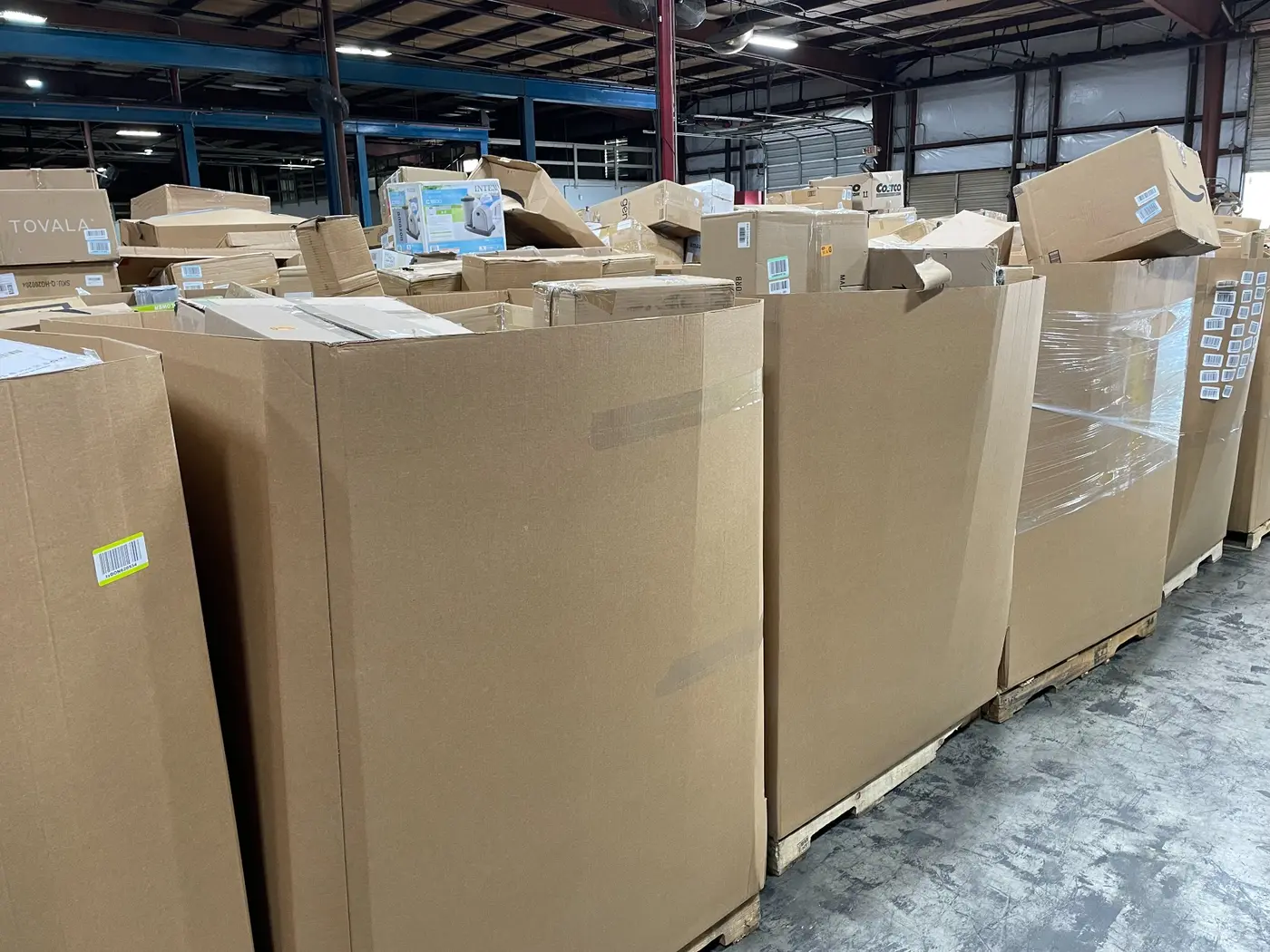
What customer returns really mean
Customer-return loads contain products sent back to a retailer after purchase. Reasons can include buyer remorse, packaging damage, missing parts, cosmetic wear, incorrect orders or functional defects. Some products may be new or nearly new, while others may require testing, repair, parts or recycling.
Return loads should never be evaluated as uniform retail-ready merchandise. The right buyer has labor, space and sales channels for handling a range of outcomes.
How to evaluate a returns load
Review the stated retail source, category mix, load type, warehouse location, estimated retail value and any available manifest or photos. Consider freight, testing labor, disposal, missing accessories and the time required to process the load.
A manifest is useful supporting information, but it is not a guarantee of exact counts, condition or resale value unless the specific transaction states otherwise.
Common resale channels
Customer returns are commonly purchased by bin stores, discount stores, auction operators, exporters, refurbishers, online sellers and flea-market vendors. Your processing model and available labor should match the condition and category mix of the load.